Cute Black and White Animal Vector Set
First Impressions: Charm Without Clutter
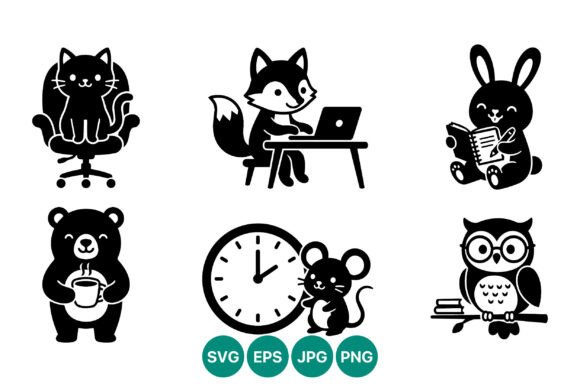
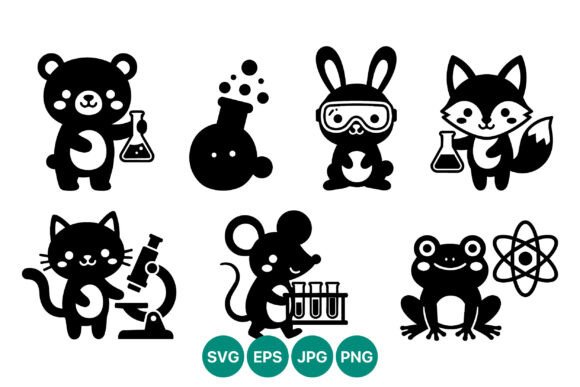
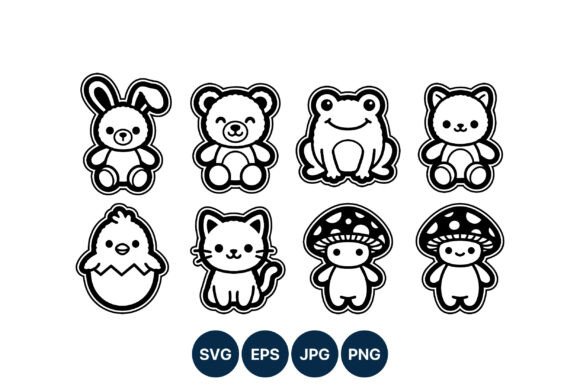
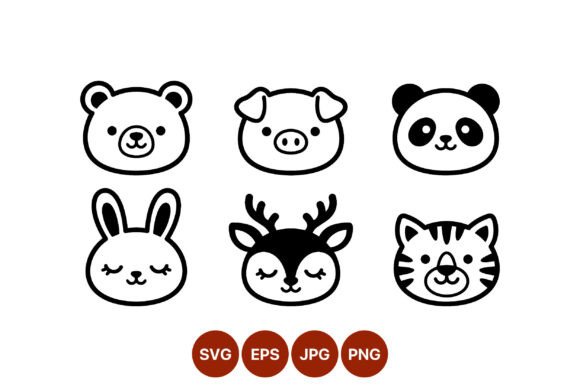
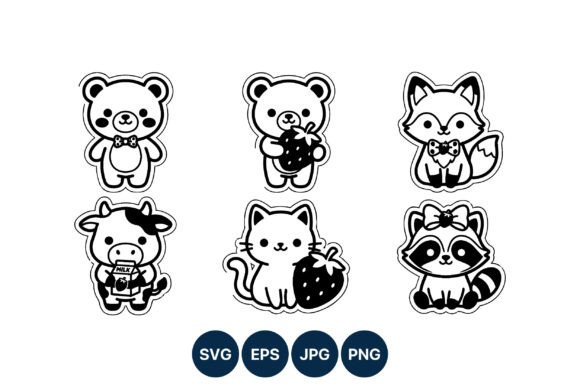
Opening the Cute Black and White Animal Vector Set, I immediately felt that familiar designer sigh of relief—no over-rendered gradients, no unnecessary shadows, no pixelated edges. Just six clean, confident vector icons: bear, bear (second variation), fox, cow, cat, raccoon. Two bears and one cat hold strawberries; the cow cradles a milk carton. It’s playful but not saccharine, minimalist but not sterile. The black-and-white palette reads as intentional—not a placeholder, not a cost-cutting shortcut—but a design choice that invites versatility. For embroidery designers, that’s gold. This isn’t just clipart; it’s a ready-made visual language for handmade product storytelling.
Stitching It Out: How It Translates to Real Embroidery
I tested the Cute Black and White Animal Vector Set on a custom embroidered tote bag for a local nursery boutique—and it landed beautifully. The clean outlines translated cleanly into satin stitch borders, and the simple shapes held up even at 3.5" wide on medium-weight canvas. No lost details, no thread nesting in tight corners. Because the animals are stylized—not photorealistic—the design avoids the trap of “too much detail for stitching.” That fox’s ear? Crisp. The cow’s udder curve? Subtle but legible. The strawberry’s seeds? Suggested, not demanded. That restraint is what makes this set work so well for machine embroidery design—especially when you’re balancing speed, clarity, and charm.
It shines on baby embroidery: think onesies, bibs, and pillow covers. The soft curves and friendly faces read as gentle and safe. On sweatshirt embroidery? Yes—especially with a light stabilizer and slightly reduced stitch density to avoid stiffness. As an embroidered patch? Absolutely. The bold silhouettes pop against denim or twill, and the lack of grayscale means no muddy color blending during digitizing. Even on curved surfaces like caps, the simplified forms adapt better than complex illustrations—fewer distortion risks, fewer re-hooping headaches.
Where to Use It Thoughtfully
This set excels where simplicity supports sincerity—but it’s not magic. On thin fabric like lightweight cotton voile or stretchy jersey, I’d add tear-away + cut-away stabilizer combo and reduce fill stitch density by 10–15%. Tiny hoop sizes (3") demand caution: the raccoon’s tail tip or the cat’s strawberry stem may need manual cleanup in your embroidery software before stitching. And while the black-and-white base gives you total thread color freedom, remember: on dark fabric, white thread needs extra coverage (more passes or denser fill) to avoid shadowing; on light fabric, black thread should be checked for halo effects around fine lines.
Don’t force it onto layered garments (think quilted jackets or fleece-lined hoods) without testing seam allowances and bulk. And skip dense decorative accents—like adding French knots to strawberry seeds—unless you’ve confirmed the file allows for easy editing. This is a Graphics set first, not a pre-digitized embroidery file. You’ll need to convert or adapt it, so check whether your digitizing workflow handles vector-to-stitch conversion smoothly.
What It Does for Your Craft Business
For Etsy sellers and small shop owners, the Cute Black and White Animal Vector Set quietly elevates perceived value. Customers recognize handmade intention—not generic stock art. When you pair it with natural linen tea towels or organic cotton baby blankets, the contrast between raw texture and crisp line work feels intentional, curated, professional. It builds brand consistency across product lines: same bear on a patch, same cow on a kitchen towel, same fox on a holiday ornament—all unified by tone and treatment.
That cohesion translates directly to buyer engagement. I watched customers linger longer on listings using these icons—especially when shown in printable mockups against real backgrounds (wood grain, marble, soft knit). They didn’t just see “an animal”; they saw *their* baby’s nursery, *their* café apron, *their* weekend market tote. That emotional hook matters more than perfect symmetry.
Designer Notes You’ll Actually Use
- Always test on scrap fabric first—especially if using textured weaves or blends. What looks sharp on screen may fuzz on burlap or ripple on terry cloth.
- Check thread color contrast in both natural and artificial light. A charcoal gray thread on oatmeal fabric can disappear under store lighting.
- Review stitch density before finalizing. High-density fills on small animals risk puckering on knits.
- Confirm hoop size compatibility—some icons scale well to 4", others feel cramped below 3". Know your limits.
- Inspect small details at 200% zoom: are strawberry stems connected? Is the raccoon’s mask shape fully closed? Vectors don’t always translate to clean stitch paths.
- Test in black-and-white mockups before committing to color schemes—this set earns its keep in monochrome.
- Compare light vs. dark fabric backgrounds digitally *and* physically. Contrast shifts everything.
- Use proper stabilizer—lightweight cut-away for knits, tear-away for stable wovens, fusible for patches.
- Verify licensing before selling finished products or digital embroidery files. This is a Graphics download—not automatically cleared for commercial embroidery resale unless stated.
Final Thought: A Quiet Workhorse, Not a Flashy Gimmick
The Cute Black and White Animal Vector Set won’t shout from a crowded craft fair table—but it will earn repeat orders, thoughtful Instagram tags, and quiet compliments like, “This feels *made*, not printed.” It’s the kind of design asset that grows more valuable the longer you own it: adaptable across seasons, scalable across products, respectful of both machine limits and human hands. Whether you’re stitching personalized gifts for new parents, building a boutique’s signature look, or expanding your digital embroidery file library, this set delivers calm confidence—not chaos. And in the daily rhythm of embroidery design, that’s the rarest, most useful thing of all.